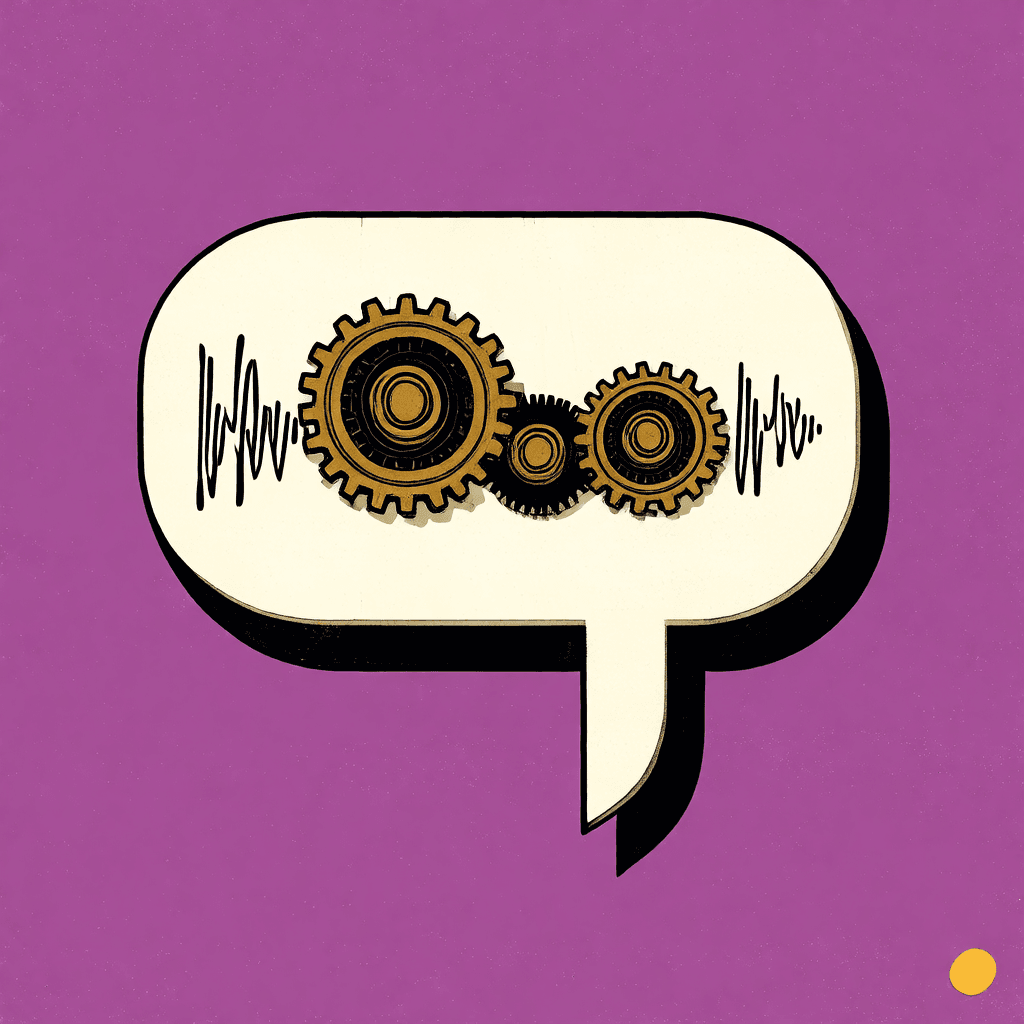
Inside Sonicker's Voice Engine: How Our AI Voices Are Made
How modern AI voice engines work — from neural synthesis to voice cloning and voice design — and what actually determines voice quality, speed, and naturalness.
Every AI voice you hear from Sonicker — cloned, designed, or synthesized — is produced by a neural voice engine running in the cloud. This post explains how that engine works, what determines voice quality, and why some voices sound human while others don't.
The three jobs of a voice engine
Modern voice engines do three things:
- Synthesis — turn text into speech with a known voice. This is text-to-speech: pick a voice, type a script, get audio.
- Cloning — learn a new voice from a short sample. The engine extracts the acoustic identity (pitch, timbre, rhythm, accent) and can then speak any text in that voice.
- Design — create a voice that doesn't exist yet from a description. "A warm, deep documentary narrator, calm and authoritative" becomes an actual voice.
Sonicker's engine covers all three, which is why one platform can handle TTS, cloning, and voice design.
How neural synthesis actually works
Without going too deep: the engine learns, from massive amounts of human speech, how language sounds — not by memorizing recordings, but by modeling the statistical patterns of prosody (pitch, rhythm, emphasis) and articulation. When you type a sentence, the model predicts the most natural way a given voice would say it, then renders that as an audio waveform.
Three factors dominate perceived quality:
- Acoustic model quality — how faithfully the voice's character is captured.
- Prosody control — how naturally pitch, pacing, and emphasis vary.
- Vocoder fidelity — how clean the final waveform sounds (no metallic artifacts, breath, or buzz).
This is why "voice cloning" and "AI voice" quality differ so much between tools — most of the gap is in these three layers, not in marketing claims.
Cloning: why 3 seconds can be enough
Older cloning needed minutes of audio because the model had to average out noise and capture every voice characteristic. Modern cloning extracts a voice identity vector — a compact mathematical fingerprint of the voice — from a much shorter sample. Sonicker can do this from 3 seconds because the identity vector captures the essential character, and the prosody model handles delivery separately.
Longer, cleaner samples still improve fidelity — but the days of needing a studio recording are over.
Voice design: describing a voice into existence
Voice design inverts cloning: instead of learning from audio, the engine maps a text description of a voice onto its voice space. Describe gender, age, warmth, depth, accent, and delivery, and the engine synthesizes a voice that fits. It's the same underlying model, approached from the other direction.
What this means for you
- Quality is in the layers, not the brand. Try a tool, then judge the three factors above — especially prosody and artifacts on long-form text.
- Speed matters. Real-time or near-real-time generation means cloning and iteration are cheap enough to experiment with.
- Multilingual fluency is separate from voice quality. A great voice in English isn't automatically great in German or Italian — the prosody model must support the language.
Sonicker's engine synthesizes across 13 languages, clones from 3-second samples, and designs voices from plain text — all in one platform.
FAQ
How does AI voice cloning work? The engine extracts a voice identity vector from your sample — pitch, timbre, rhythm, accent — then uses a neural prosody model to speak any text with that identity.
Why do some AI voices sound robotic? Usually weak prosody control (flat pitch and rhythm) or vocoder artifacts (metallic buzz). Better engines handle emphasis and pacing naturally.
Can a cloned voice speak other languages? It depends on the engine's multilingual prosody model. Sonicker's cloned voices work across its supported languages.
Is voice cloning instant? With a 3-second sample and modern engines, cloning is near-instant and re-runnable — you can retrain from a better sample anytime.
Hear the engine for yourself. Try voice cloning, design, and TTS — free to start, no credit card required.
Ещё публикации

Sonicker Now Speaks 13 Languages: Deutsch & Italiano Join the Studio
Sonicker's voice cloning, voice design, and text-to-speech now support German and Italian — bringing the platform to 13 languages with fully localized interfaces.

How to Clone Your Voice with AI: A Beginner's Step-by-Step (2026)
Learn how to clone your own voice with AI in minutes — what audio you need, how the cloning works, which settings matter, and how to use cloned voices commercially in 2026.
How to Describe a Sound Effect in Writing (and Generate It with AI)
A practical guide to writing sound effect prompts that AI actually gets right — with formulas and examples for alarms, impacts, UI sounds, ambience, and more.